WOMBAT DISTRIBUTION MAP from WA
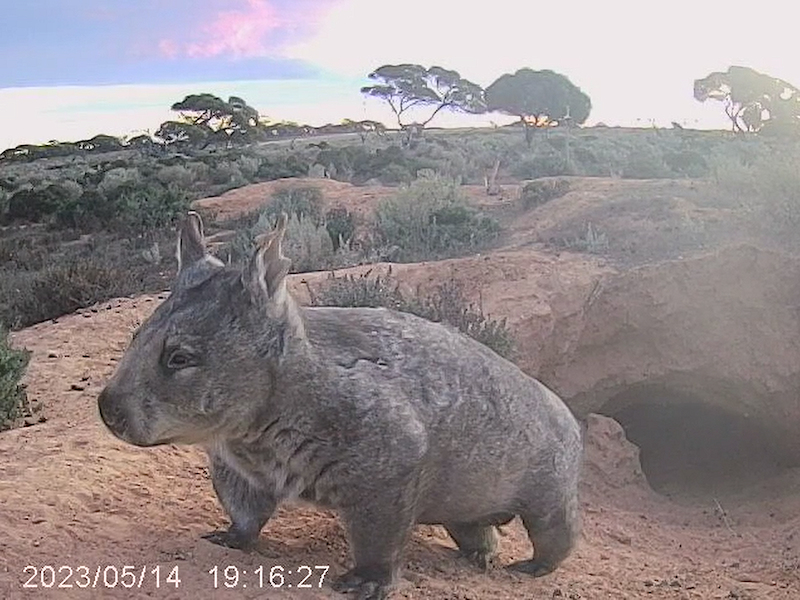
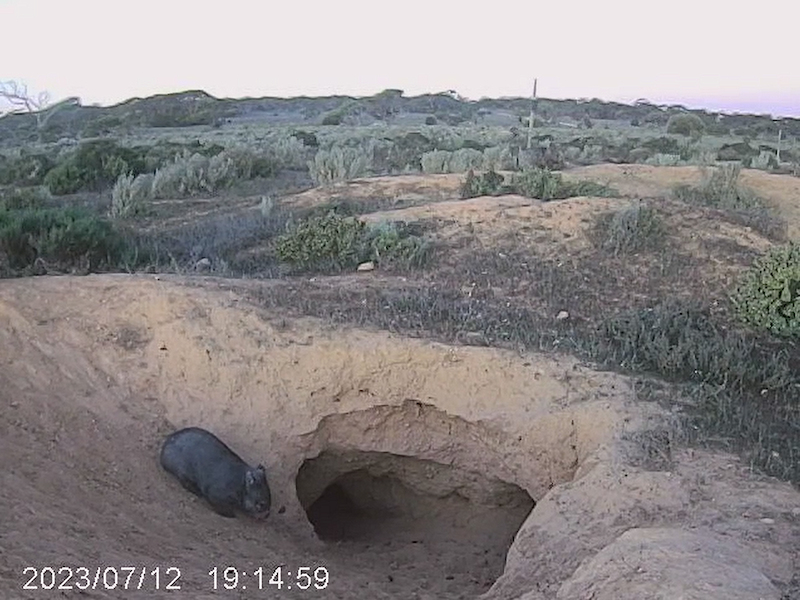
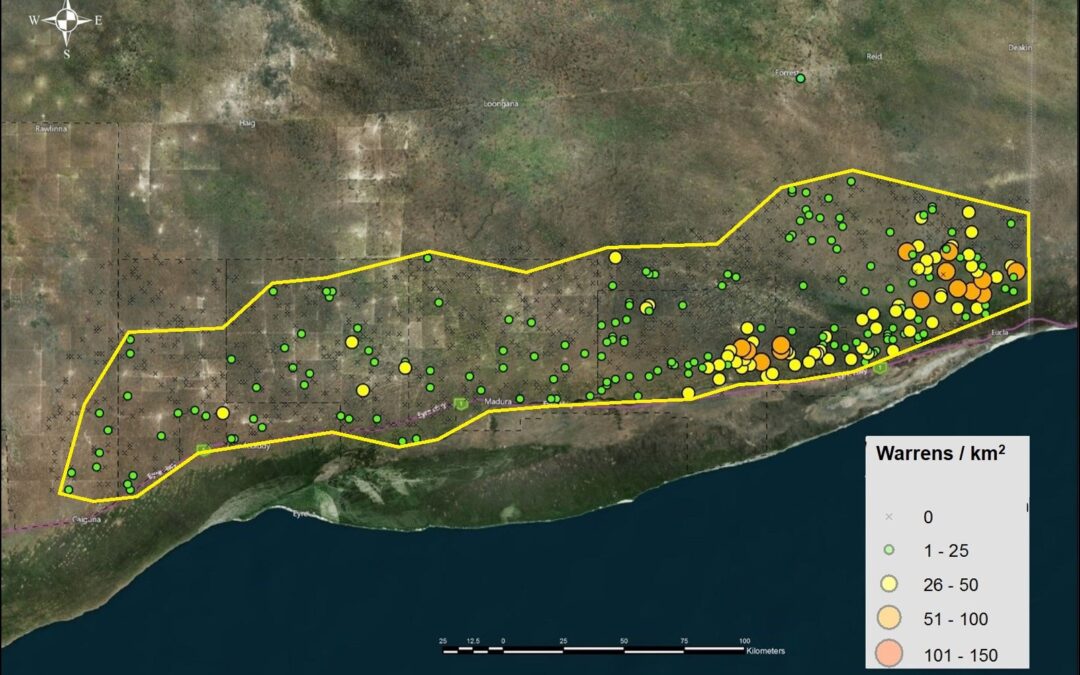
The map (just West of the SA Border) shows the distribution and local area abundance of Southern hairy-nosed wombats in WA. (See Nullarbor S.H-N wombat photos below). It has several distinct features which are the same for every species and region. The Legend shows how the density varies over the area. Photos below show what Nullarbor wombats and warrens look like.
The yellow outline is what most distribution maps show, basically just an envelope with all instances of the animal occurring inside and no occurrences outside. There can be a few exceptions to this (note the isolated population near Forrest – Green Dot above the RHS of the envelope), but in general the only place you will encounter the species is inside the envelope. The envelope will be based on several factors which limit the distribution of the species. These include climate (especially temperature and rainfall), land-use, vegetation, landform (flat or hilly terrain etc), and geographical barriers (mountain ranges, rivers). In the case of wombats, this also includes soil type and friability, as they cannot construct their burrows in unsuitable soil (too hard, wet or sandy).
Plus, you can see there are large areas inside the envelope where you will probably NOT encounter the animal. This is usually because the local landscape factors (land-use, vegetation, etc) are not suitable for it. The population density also varies markedly, and for the same reason. It may also be the case that the species is undergoing a decline or expansion in its distribution, and as a consequence some areas are less densely populated.
It is also extremely important to note that a species distribution may not be contiguous. There may be large gaps between population groups for both anthropogenic and natural reasons. This occurs in the cases of both species of hairy-nosed wombats, more details will be shown in the sections covering each wombat species distribution map.
Additionally, species distributions change over time – they are not fixed! e.g. Southern hairy-nosed wombats used to occur on Kangaroo Island! The fossil record shows they were present up until at least 11,000 years ago, which is about the same time as it separated from the mainland due to sea level rise following the Last Glacial Maximum (LGM). But why (and when) they disappeared is still a mystery. (An attempt was made to reintroduce them in the 1920s, and they were still present in the 1950s, but once again they disappeared for reasons unknown.)
We hope this information helps you make sense of the maps and information on the other pages.
The Southern Hairy-nosed wombat photos below are from videos provided by student researchers who worked out near the Nullarbor.
Thanks for your work and the videos Gemma and Natarsha!
The next page is about SA Historical Wombat Spread Comparison