SA Wombat information: Compare the images below via the Slider (use arrows or click RHS)
When it comes to Southern hairy-nosed wombats, how do we know what we know (or think we know?).
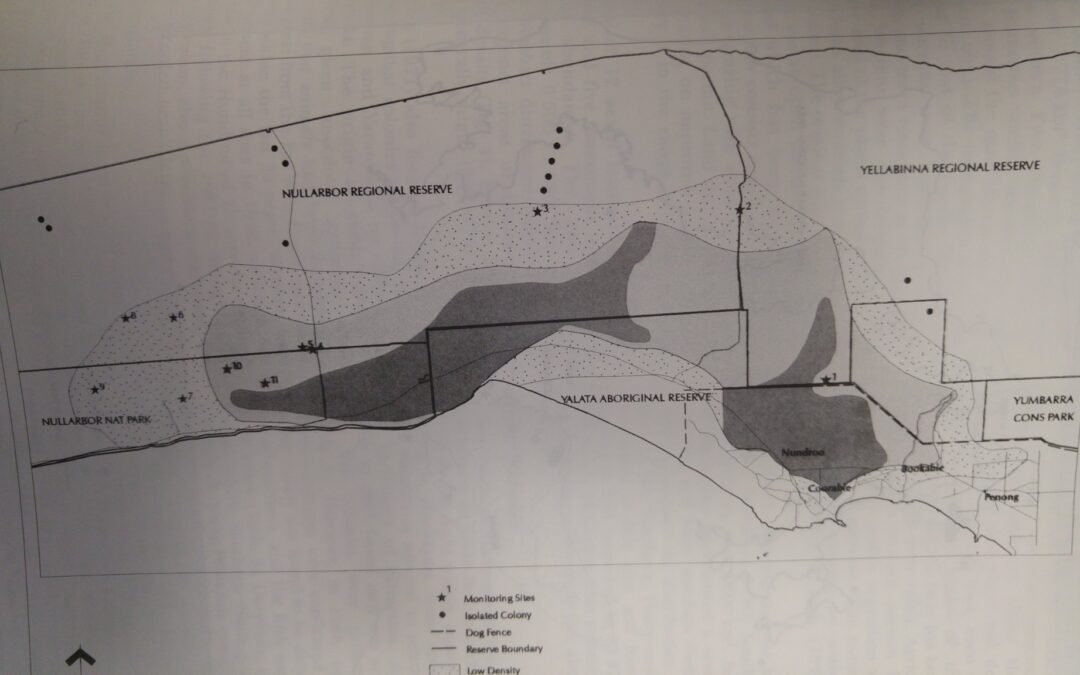
The first in-depth studies on the distribution and abundance of southern hairy-nosed wombats were undertaken in the 1970s by Peter Aitken, the curator of mammals at the SA Museum (see map above). To understand what might have occurred prior to that, we have to rely on incidental reports from explorers, pastoralists, government surveys, naturalists and the general public, etc. While this allows us to build up a reasonable picture of where wombats might have been found, there are a couple of things that we need to take into consideration.
Firstly, some of these reports can be ‘less than reliable’ – for example, generically using the term ‘wombat hole’ to refer to any sort of animal burrow – and there are obviously fewer reports for the less populated areas like the Nullarbor or Gawler Ranges. So to ‘fill in the blanks’ we have to use our current knowledge of the sort of landscapes where wombats can and can’t live, coupled with what we know about things like pre-landclearing and pre-rabbit vegetation. So while we are confident that our understanding of the ‘former’ distribution of southern hairy-nosed wombats is accurate, we have to accept that it may not be perfect, and if any new evidence is uncovered we would have to update our maps.
The map from the 1970s of the Nullarbor population, coupled with the accompanying descriptions in the reports from the time and from the 1980s are extremely valuable, as they provide a baseline from which we can understand the changes which have taken place over the past 50 years. Interestingly, they also describe a population which was already undergoing radical changes, with large increases in both distribution and abundance in many areas. For example, in her 1985 report, Barbara St. John provided the following description of the Lake Acraman (Gawler Ranges) population:
” Southern hairy-nosed wombats had been ‘comparatively inconspicious’ on Hiltaba Station up until the early 1960s, according to the station manager Mr R. Chevalier. By 1965 when Aitken began his work, southern hairy-nosed wombats had increased in number and expanded their range. Indeed, when Aitken compared the range of the wombat on Hiltaba between 1965 and 1970, he found futher range expansions (approximately 30 km W) and increases in warren density. …. A comparison of Aitken’s 1971 data with 1985 survey data indicated that the Lake Acraman population had again increased in size and moved about 25 km south and south-west.”
The researchers at the time attributed this to the control of rabbits via myxomatosis, which makes sense. Similar changes have occurred over the past years since the release of Rabbit Calici Virus, and surveys over the past 7 years we have noted further increases in both distribution and abundance in these regions. If you were to go to Hiltaba Station today (it is now a nature reserve), you could not possibly describe the wombat population as ‘inconspicious’.
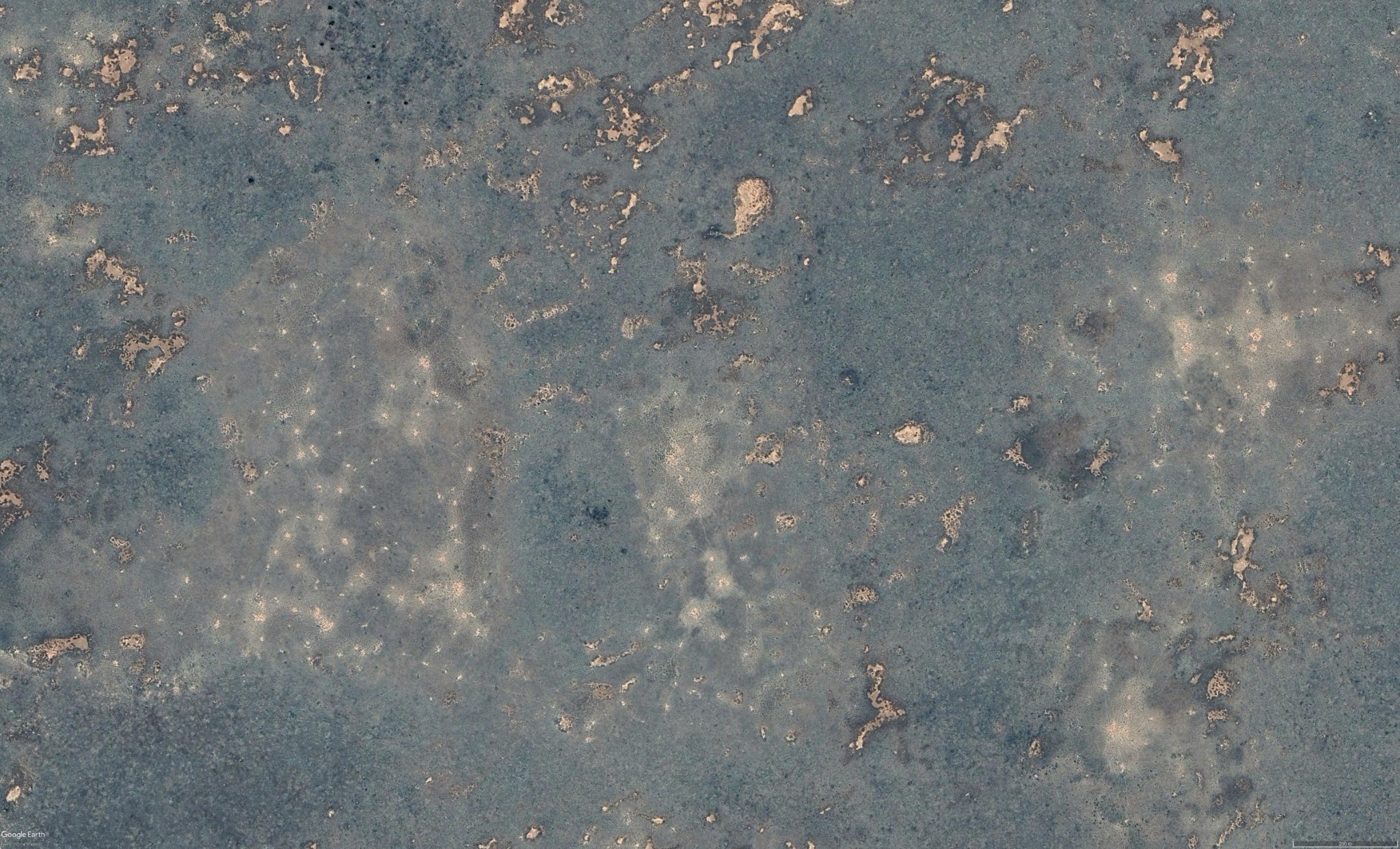
If you look at the Nullarbor map from the 1970s, you will note that the western edge is near Koonalda Homestead (shown on the map as monitoring site #9). This is around 80 km West of the WA border, and the population density in the area is described as ‘low’ (fewer than 20/sq km). The Wombat researcher has been to Koonalda on a number of occasions, and the population density is now described as ‘high’ (up to 100/sq km). If you look at the area on Google Maps, you will see why. The satellite image shown below is from an area 15 km from the WA border (60 km west of the edge of the 1970s distribution). As you can see, there now are a lot of warrens in this area that, only 50 years ago, was being described as wombat-free. So obviously the wombat population out West has been growing dramatically over the past 50 years or so, which leads us to wonder what it was like before that, and is it the same everywhere?
More information in the next section.