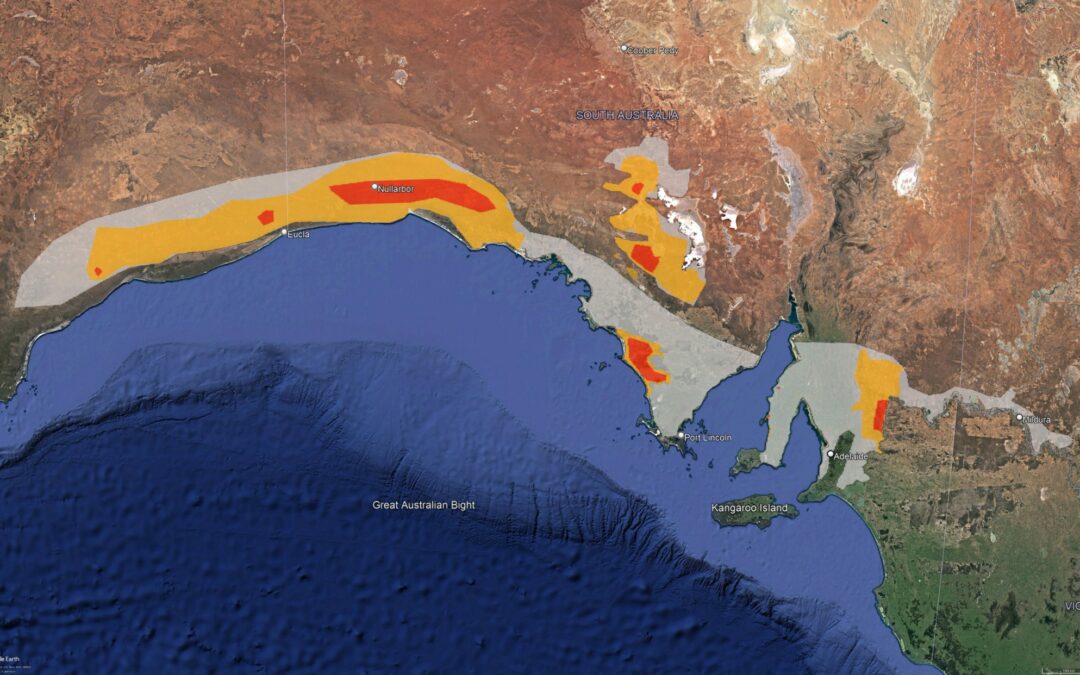
A map of the distribution of southern hairy-nosed wombats.
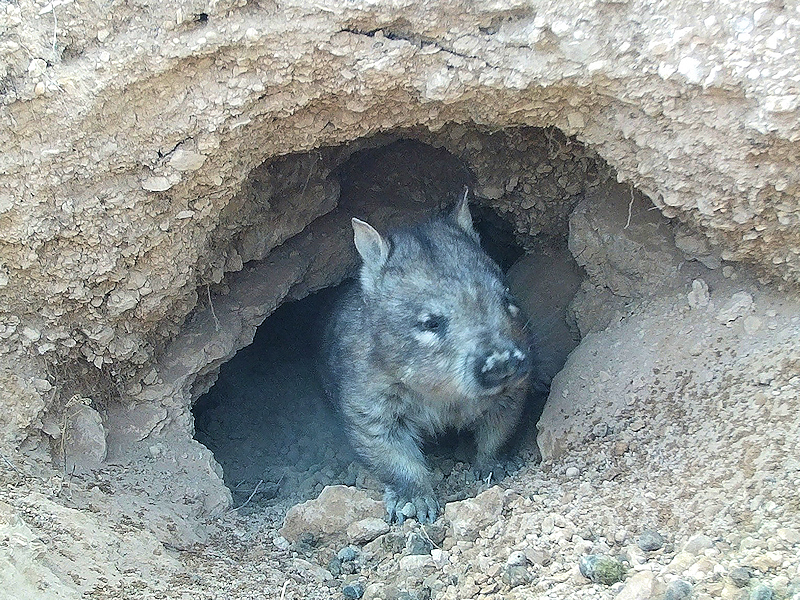
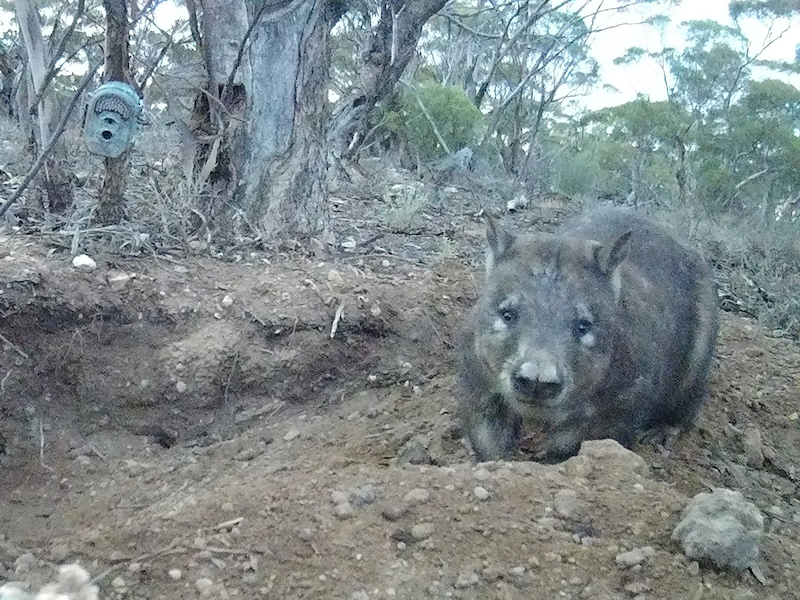
There will be maps of all three species individually before putting them all on one single map. But first, there will be some commentary on each species. These maps are based on a range of reports, and in the case of southern hairy-nosed wombats, there has been generally good reporting for most areas and our Researcher is confident that this is a fairly accurate portrayal. Photos of Southern Hairy-nosed Wombats below.
The three colours on the map represent different time points:
White = the distribution around the middle of the nineteenth century. This is when we first started reporting and recording the species, and is also a good starting point before the most significant impacts of European colonisation on wombats.
Red = the distribution in the middle of the twentieth century, following the rabbit plagues and before wombats became a protected species.
Orange = the current distribution.
This shows that in the mid-nineteenth century southern-hairy nosed wombats could be found from around Balladonia in WA – with the Fraser Range representing a geographical barrier – across the south-central regions of South Australia, and along the northern banks of the Murray River to the confluence between the Murrumbidgee and Murray Rivers near Euston in NSW. At that time that area was covered by swamps and billabongs, but it has since been desiccated by upstream water extraction. There was a gap between the Gawler Ranges and Eyre Peninsula populations, and the main distribution was split into two by Spencer Gulf. There was unlikely to be any southern hairy-nosed wombats in the higher peaks of the Mt Lofty Ranges, although they did occur lower down.
The introduction of rabbits in the late nineteenth century decimated the wombat population due both to competition for resources and human action, which resulted in wombat warrens being destroyed in order to control rabbits. The release of myxamotosis in the 1950s and calicivirus in the 1990s finally reduced the worst impact of rabbits, and wombats have been recovering ever since – albeit with short-term fluctuations in abundance caused by drought. But as the population recovered, southern hairy-nosed wombats moved into a landscape that had been fundamentally altered. Much of the woodlands had been removed for agriculture, and overgrazing by rabbits had prevented the recovery of woody vegetation in many areas. A potential competitor in some areas- the burrowing bettong – had also disappeared, as had the wombats’ main predator (the dingo). So while in some areas – especially croplands – wombats were prevented from returning, in others their numbers boomed far beyond what there would have been in the past.
The impact of climate on wombats is important to bear in mind. The fossil record indicates that hairy-nosed wombats could once be found in many parts of the interior of the continent, but as it became more arid they were forced towards the southern and – in the cause of northern hairy-nosed wombats – the east coasts. As sea levels rose following the LGM, the southern hairy-nosed wombat population was confined to a relatively narrow strip along the southern coast and was cut in two by the flooding of Spencer Gulf, which at the time would have been a broad river valley. Current and future climate change is likely to have further negative impacts on wombats across much of their range – and it is something that we are monitoring with ongoing research.
The Southern Hairy-nosed wombat photos below are provided by active member Wayne Donald who has Wildlife Motion Sensor Cameras at warrens on his property near Moorunde WR. Thanks Wayne!
The next page describes what we know about northern hairy-nosed wombats, so please check it out.