This covers how the distribution maps of Bare-nosed wombats in Victoria is telling us.
It goes to the heart of what distribution maps are really telling us and our researcher has helped us provide detailed information about the distribution of the three wombat species, and not just provide maps.
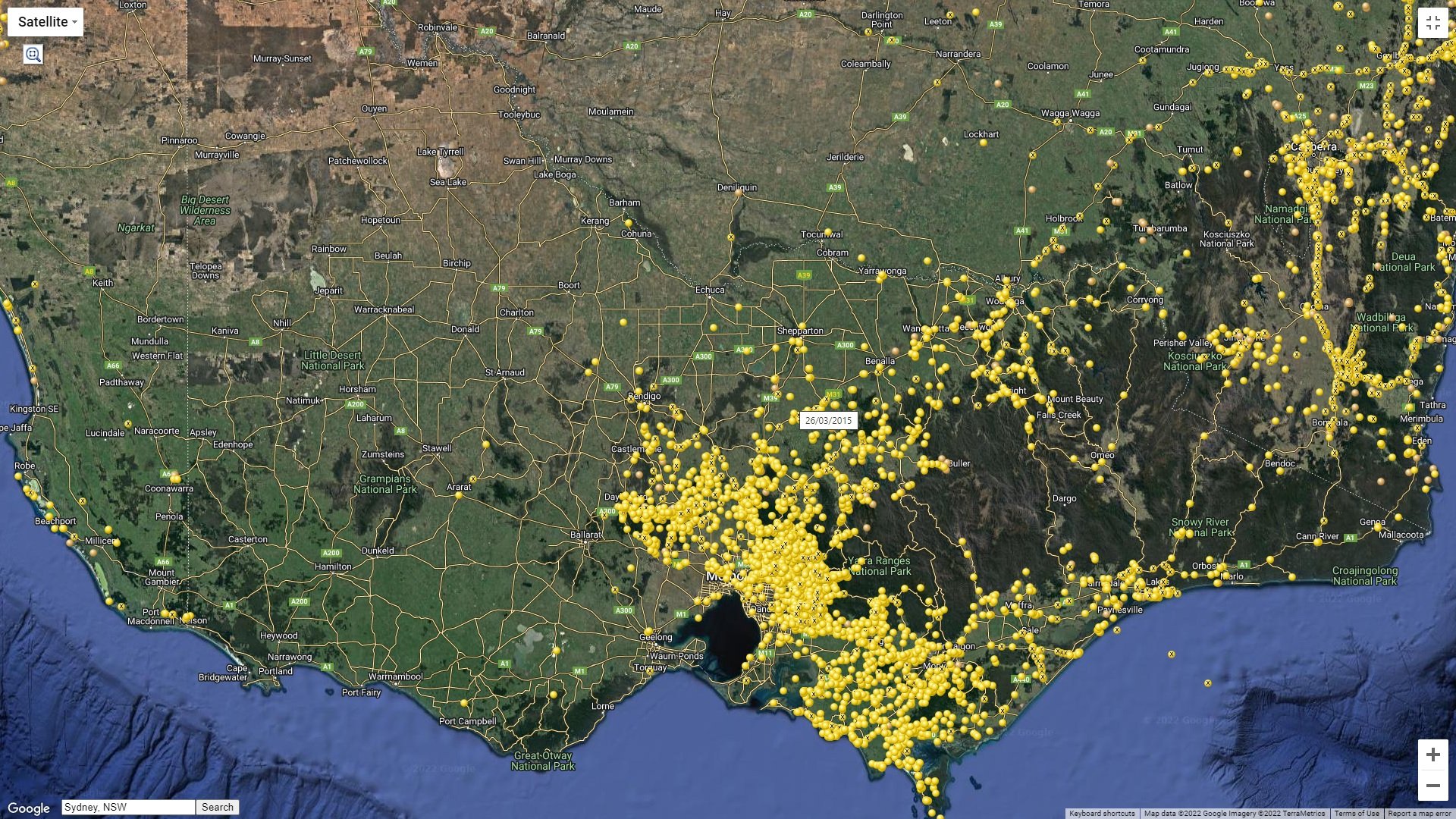
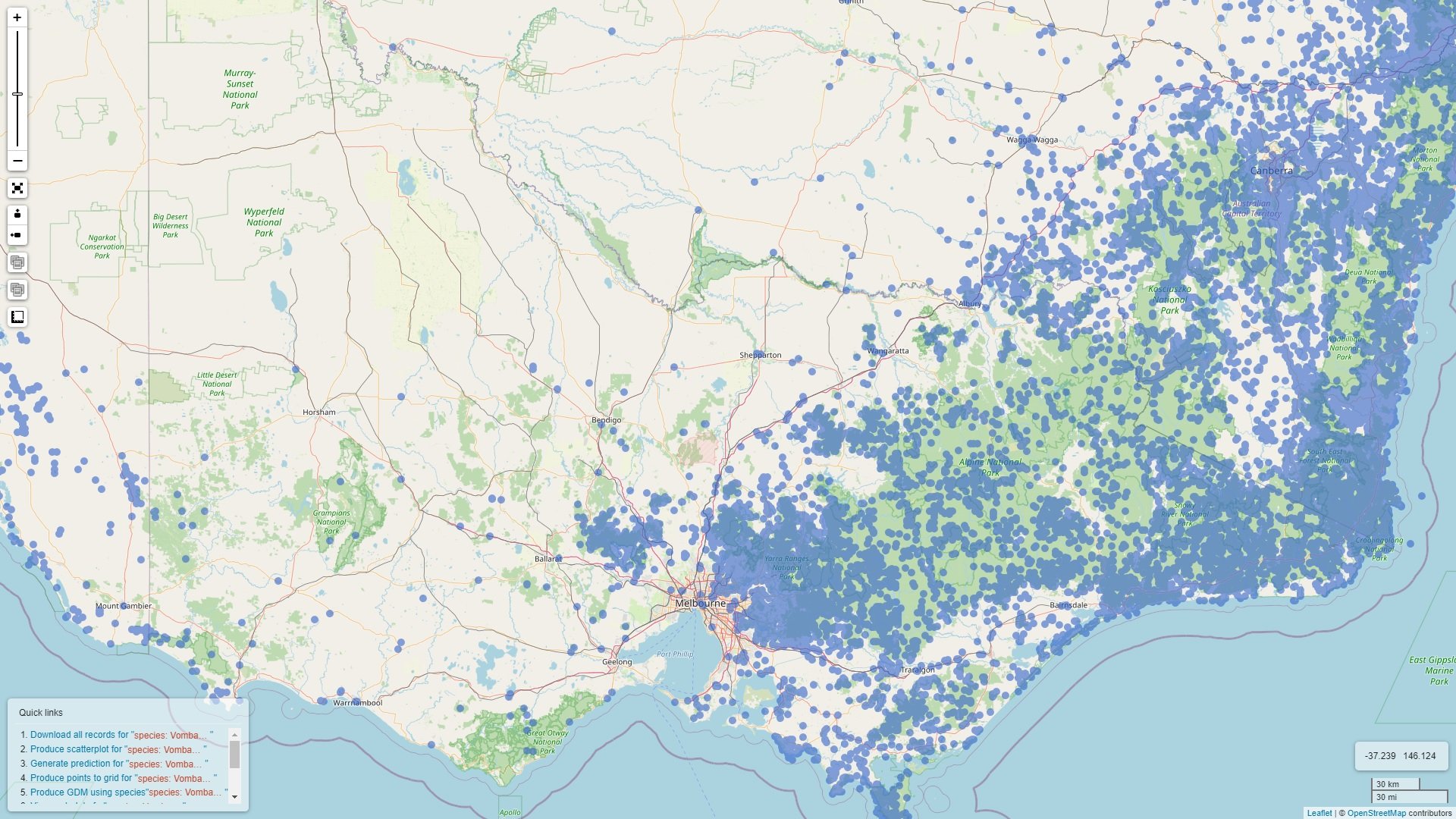
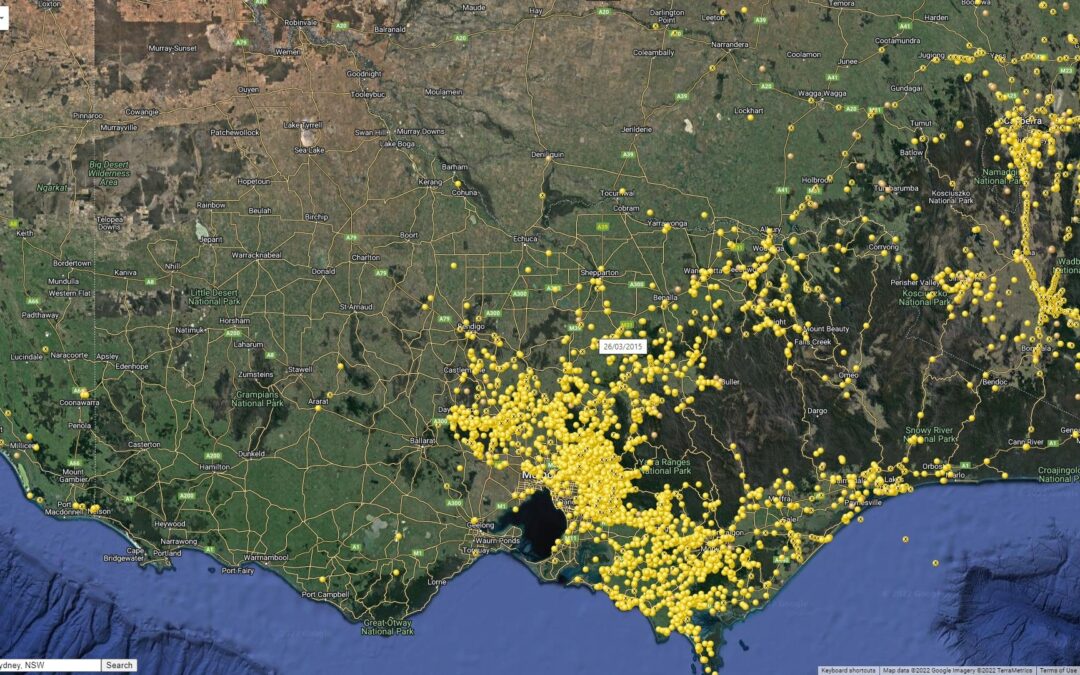
If you look at both the ALA Map (towns and roads, etc above and below) and the WOMSAT Map (the satellite image below) of Victoria you will immediately notice something unexpected – the number of reports of wombats from the West of the state is significantly less than from other regions. The low number of reports from the East of the state on the WOMSAT image is almost certainly due to the low number of people living in – and hence reporting from – the high country, but this is not true for the west of the state. So what is going on?
You may be aware that in the early 20th century Victoria declared that wombats were vermin and could be hunted and destroyed with impunity!
So from 1926 – 1966 Victoria had a bounty on any wombat destroyed! Even though the bounty was removed in 1966, the killing of wombats in the state was still unofficially sanctioned. (see this news link and if you can spot what is wrong with the wombat picture in this news story!). It was not until February 2020 that wombats were officially listed as protected in the state. As a consequence, wombat numbers all over Victoria, but especially in the agricultural regions in the west of the state, are extremely low.
A 2020 study for the Victorian Government (PDF is here -opens in a new window) suggested that wombats were absent from many regions in the west of the state, and predicted that the overall Victorian numbers were ~ 433,000 individuals. That might sound like a lot, but it is only around half the number of southern hairy-nosed wombats on the Nullarbor Plain alone. Fortunately, since wombats became protected in Victoria their numbers appear to be recovering (see this link to a 2027 report).
But landscape changes and housing estate / business precinct developments – especially the removal of habitat – and wombat’s complete absence from some areas – means that while wombats will remain present and will recover in some regions, they will probably never return in any significant numbers to most of western Victoria.
Thanks heaps to WOMSAT and ALA for their great data and map systems!
The next page will cover the Bare-nosed wombat population of Tasmania and offshore islands, including the Bass Strait Islands.
Note:The WOMSAT and ALA maps are both in a automated slider immdiately below to compare them.
If you click and the image gets bigger, once done you can close it down by clicking the “X” at the top right of either image.