This page is about Bare-nosed wombats in Tasmania and offshore islands, including the Bass Strait Islands.
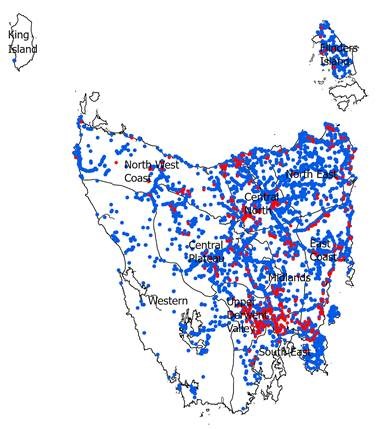
The image above is the original map of Wombats (blue dots) and Mange (red dots) created from work by our long-term researcher.
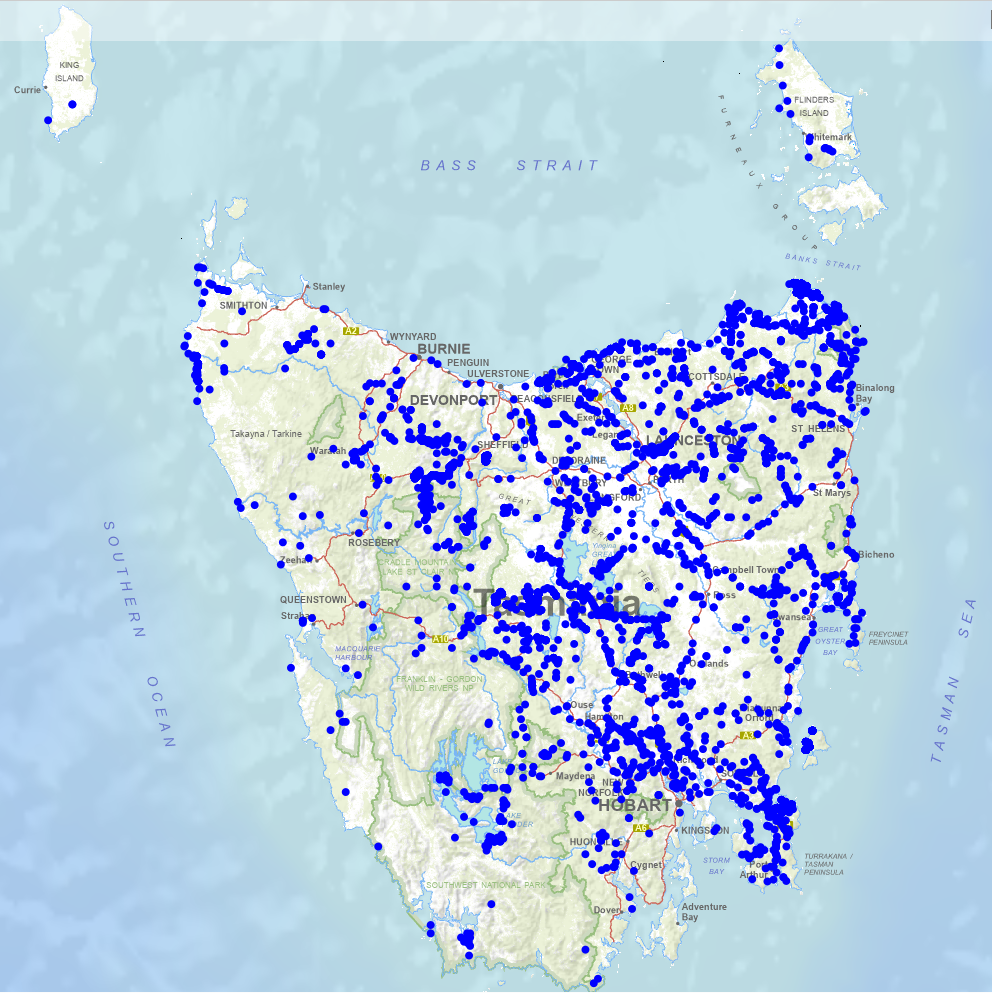
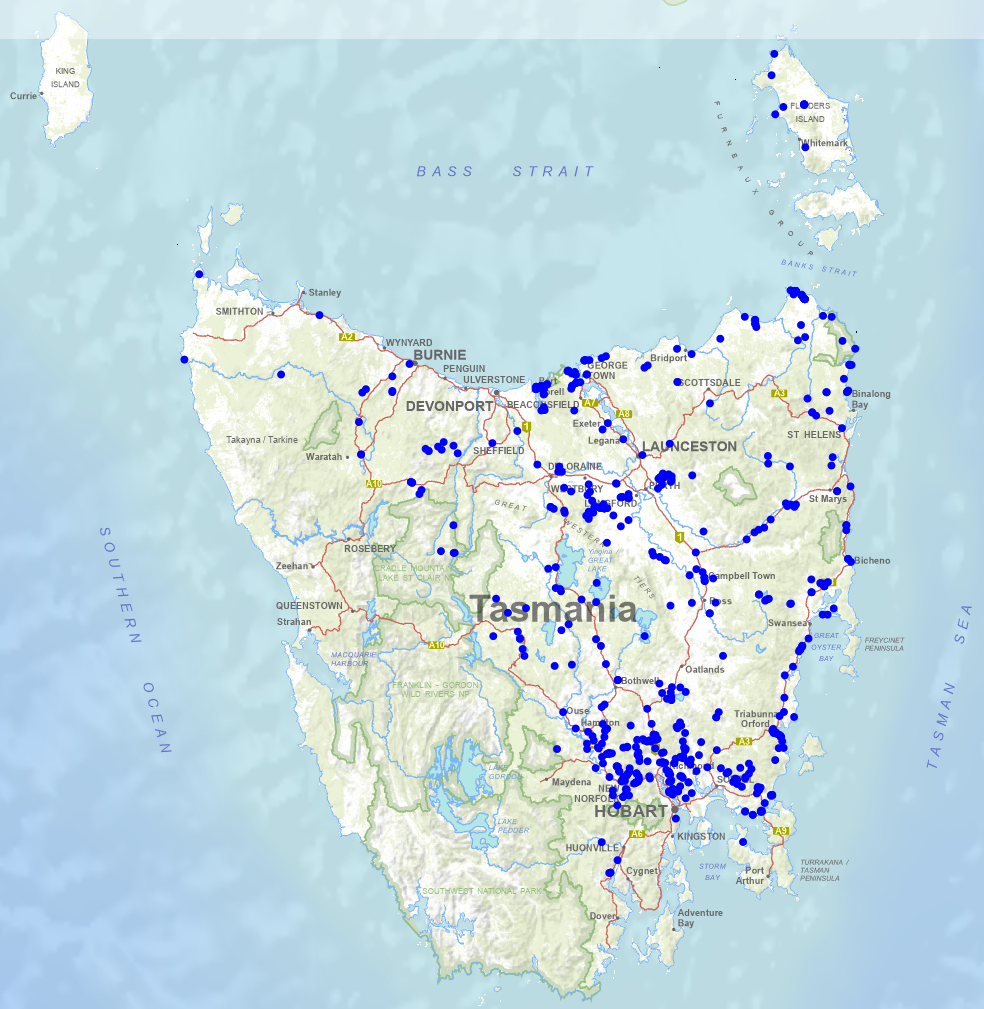
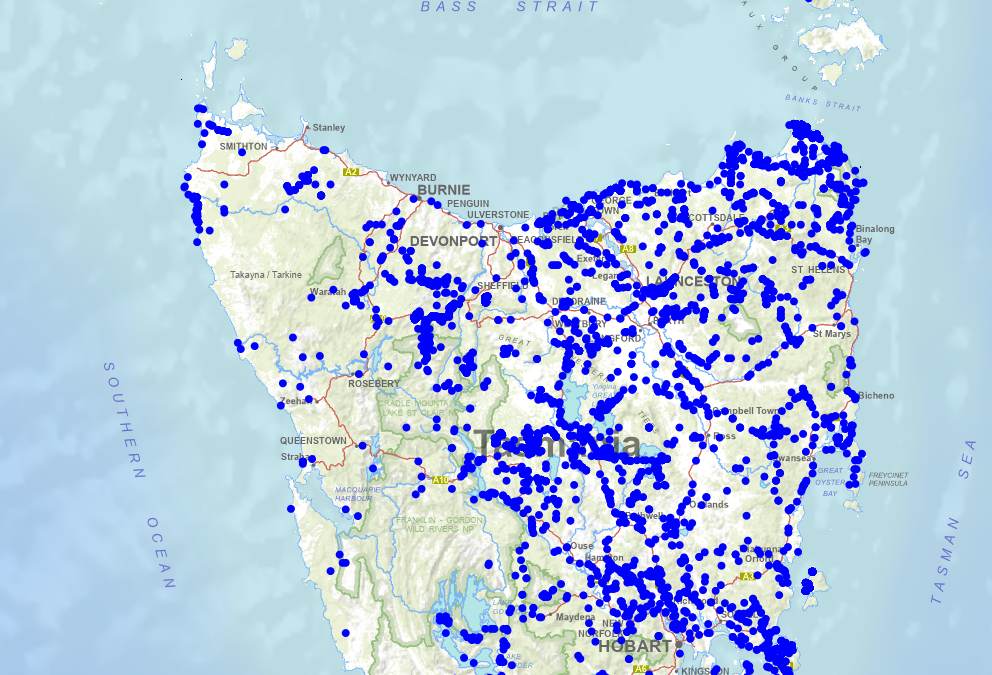
See below the text a slider with more current maps of community observations of Wombats and Mange – a bit less reliable, but useful.
Island populations make interesting studies for a number of reasons. As island populations of a species are isolated from others on the mainland, they can act as an ‘insurance’ population which is immune to changes like disease, human persecution and feral predators which might decimate the main population group.
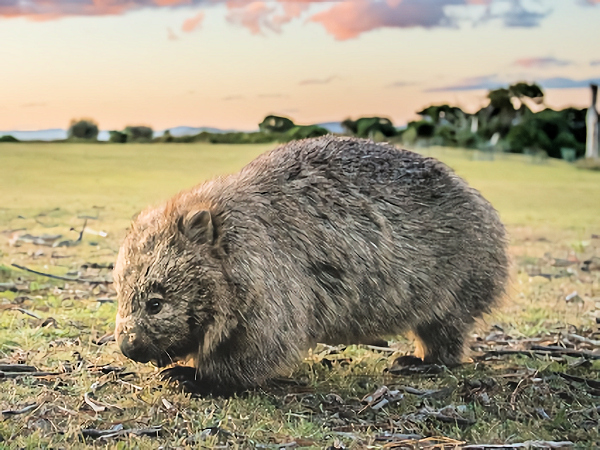
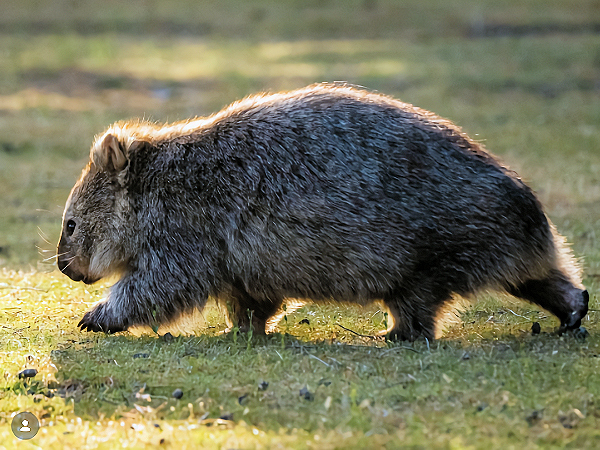
The images are of 2 Maria Island Wombats, first one younger than the moving adult one. Tasmanian wombats are a bit smaller and have longer hair than mainland Bare-nosed wombats. Thanks for the photos Wombats of Tasmania! Click to see more on Instagram.
Indeed, the wombat population on Maria Island off the east coast of Tasmania, which was introduced there in the 1970s (although there are a number of reports which suggest that wombats may have already been present on the island at the time of the introductions) is free from mange, which makes it an important refuge population. Conversely, island populations are vulnerable to genetic isolation and inbreeding, and they are at risk from disturbance, the arrival of predators and / or competitors, and disease which could quickly wipe out a geographically constrained group.
The Bass Strait islands make an interesting case study of the impacts of these and other factors on a species like wombats. The western end of Bass Strait, King Island is currently wombat free, although why this is the case is difficult to determine. There is no real reason why wombats should not be present on the island – all the landscape factors are favourable, and there is evidence that they were present in the recent past.
In his logbooks, the captain of the ‘Lady Nelson’ reported that on the 19th January 1802, the ship’s company ate a wombat (and swan and kangaroo) that they had caught while exploring King Island. However, an 1887 expedition by the Field Naturalists’ Club of Victoria failed to find any on the island.
If both reports are accurate, it suggests that wombats become locally extinct on King Island some time in the nineteenth century, but when and why cannot be determined.
At the other end of Bass Strait, wombats are currently present only on Flinders Island, but they have also been recorded on Cape Barren and some of the nearby smaller islands like Preservation Island – which is were wombats were first encountered by European colonisers in 1792. Once again, when and why they disappeared from these islands is not known, but is probably related in some way to human influences.
Wombats would have become isolated on these islands when Bass Strait was flooded due to sea level rise following the Last Glacial Maximum around 12 – 8,000 years ago. The fact that they were still present 230+ years ago, but disappeared soon afterwards, is strong circumstantial evidence of European human influences.
On Tasmania itself wombats are fairly widespread, occurring in most parts of the state (as per this link). They are probably less abundant in the dense rainforests in the south-west, although reporting from that area can be problematic given its inaccessibility. While mange is a significant problem in some parts of the state and has resulted in catastrophic declines in some population groups (see this link), the overall trend in Tasmanian wombat numbers has been positive over the past few decades. (see this link).
This page is the last of much valuable information on wombat distribution and the changes that have occurred since European colonisation.
On the next page there will be a map showing these changes in all three species, along with some conclusions.
See below a slider with more current maps of community observations of Wombats and Mange. Not as accurate as researcher work, of course.
Note: The Wombat reports (more blue dots) and Mange Mite (less blue dots) so you can compare them.
If you click and the image gets bigger, once done you can close it down by clicking the “X” at the top right of either image.