
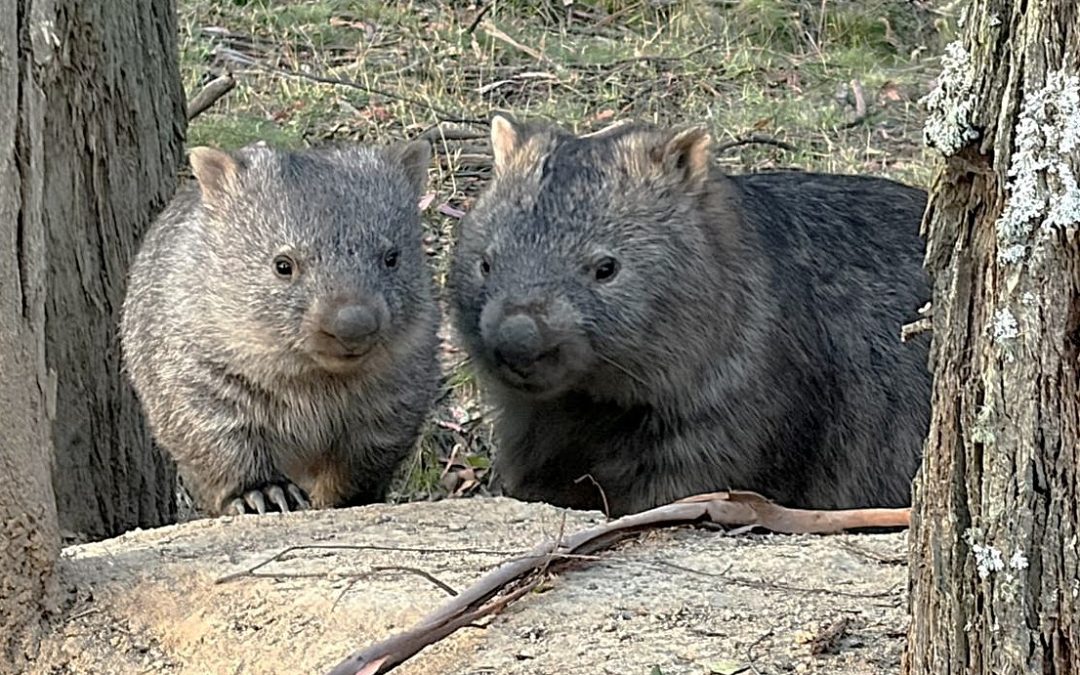
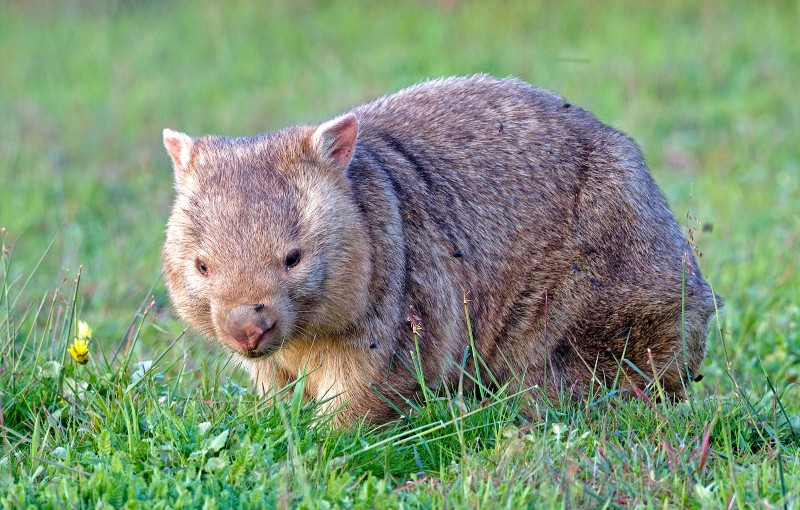
Bare-nosed wombat on the Coorong – Thanks Colin Cock
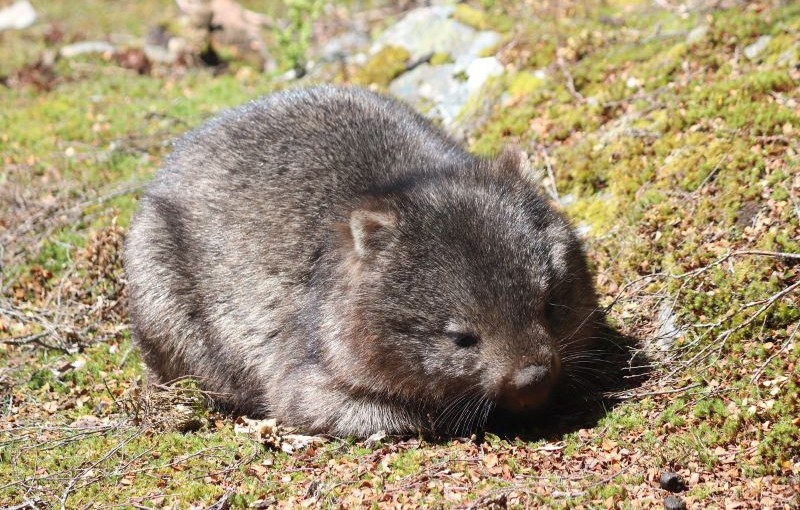
Tasmanian Bare-nosed Wombat – Thanks Merv Renton
This is the last of the three wombat species, Vombatus ursinus, Bare-nosed or Common Wombat.
Our very experienced wombat researcher reports that the problem with providing accurate ‘former’ distribution maps for Bare-nosed wombats is that no-one seems to have done the detailed work to try and map what the species was like in the mid-nineteenth century, and the level of reporting is actually quite low. That means that in order to understand where they might have been at that time, he had to do quite a bit of “detective work” and to extrapolate from what we know about their distribution today, along with what scant information is available – especially around the edges of the current distribution. This can be coupled with we know about the sort of landscape they prefer and hence, their ‘likely’ distribution.
Fortunately, there is actually some very good and detailed information available about their current distribution that anyone can access and use for themselves, providing a pretty good start!
The first tool is a web portal called the Atlas of Living Australia (the link opens in a new window).
This is an excellent resource which collates information on a range of Australian native species, one of which is vombatus/Bare-nosed Wombats.
Take a look at the page and familiarise yourself with the tools available there working with it. It’s free to use, and is available for anyone. As you can see if you look at the webpage, not only can you view a map of wombat sightings, you can also download all the data and use it on your own maps that you may wish to create.
It is important to note that, just like with a lot of these tools, you also need to know what you are looking at. If you look at the interactive map of Bare-nosed wombat sightings you will note that some of them are obviously nowhere near where you would expect to find a wombat. This is because the sightings include thing like wombats in zoos and museum specimens, and you need to filter these out if you want to build an accurate map. Some of the sightings are also very old, so once again you need to remove these if you want to look at the current distribution.
Lastly, there can be a few that do not pass ‘the pub test’ (to quote our fearless leaders). If something looks wrong, it probably is. Fortunately all the records come with details of who reported them and when, so you can consider whether or not they are valid reports.
The second on-line tool is a citizen science page run by the University of Western Sydney called WOMSAT (link opens in a new window).
This is a page where anyone can upload or report wombat sightings – you can even add to the page yourself, and help improve the records.
The beauty of WOMSAT is that, unlike the ALA, these sightings are all quite recent, so it can give you a more easily accessible map of their current distribution.
However, because this is a citizen science page it is naturally biased towards areas where there are more people – hence, more reports. Wombat populations in remote localities can be missed simply because there is no-one there to report them.
NOTE: That this does not appear to be true in the case of Southern Hairy-nosed wombats on the Nullarbor, because the long-term researcher has uploaded a lot of his own data to the site.
It’s really worth checking out those two pages mentioned above and playing around with them to get familiare with the tools and the information available.
The next page covers some of the things we know about the ‘former’ distribution of Bare-nosed wombats.